Why Everyone Is Talking About GaN Chargers
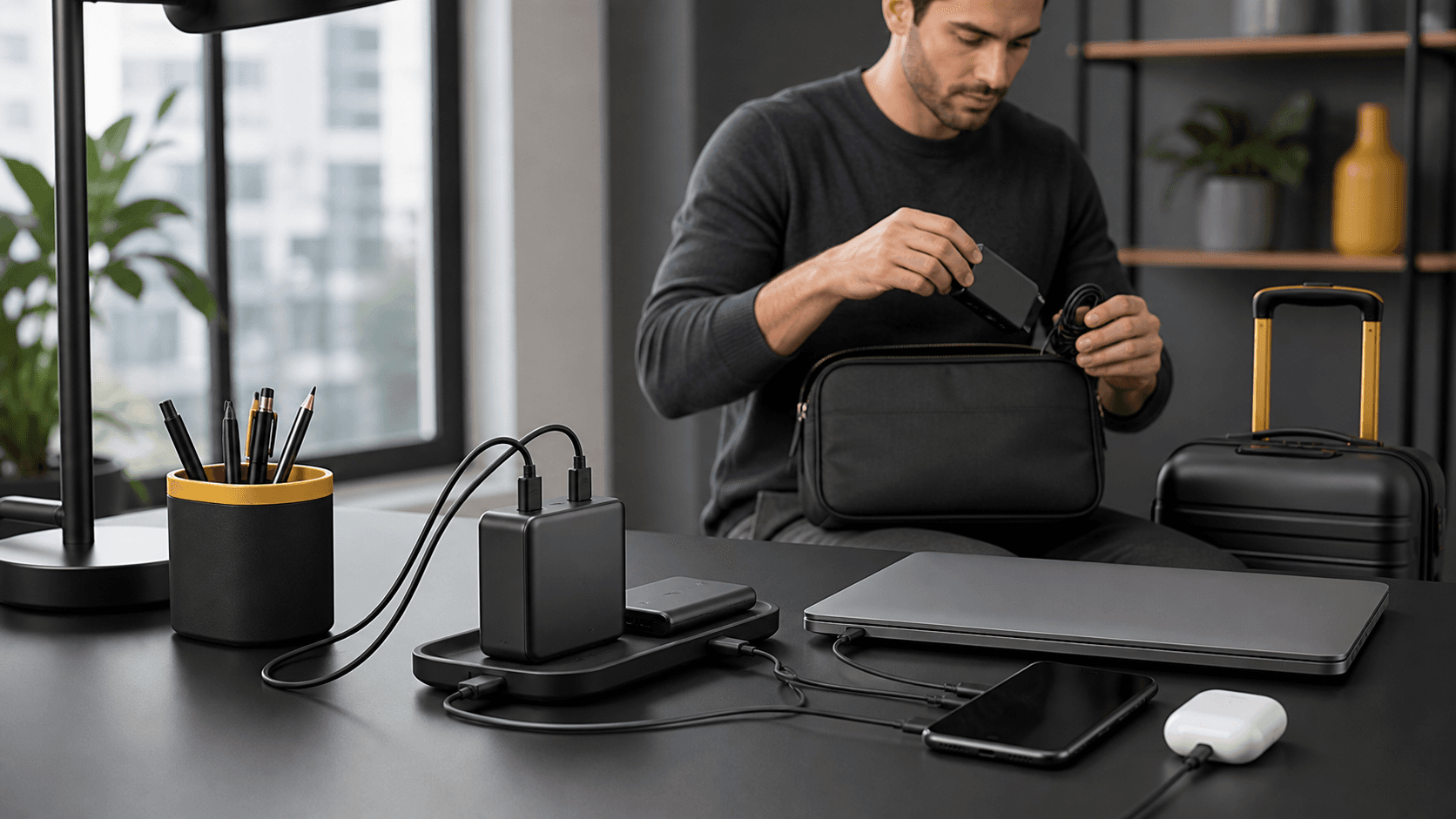
GaN chargers are everywhere now, especially in the bags of Travellers, digital nomads and anyone who lives on their laptop and phone. The size is impressive, the charging speeds are even better, but one question sits quietly in the back of people’s minds: are GaN chargers safe? When you are plugging expensive gear into a tiny brick that gets warm, it is normal to want clear answers, not marketing spin.
In this guide, we will explain what a gallium nitride charger actually is, why it behaves differently from the old silicon bricks, and what “safe” really means in day-to-day use, from overnight charging to long-haul flights. As an Australian-owned brand focused on GaN technology, we design chargers for people who travel and work remotely, so we will use our Zeus 280W GaN charger as a real-world example of how a compact, high-output charger can be both powerful and safe when it is done properly. You can explore our wider range of travel-ready charging gear at Chargeasap.
What Makes GaN Chargers Different to Normal Bricks
A gallium nitride charger replaces the traditional silicon parts inside the power circuit with gallium nitride, a different semiconductor material. In plain terms, GaN lets electricity switch on and off much faster and more efficiently. That means less wasted energy as heat, smaller internal components and more power output from a much smaller charger body.
With a GaN design, the charger can:
- Run more efficiently, so less energy turns into heat
- Use smaller parts, so the whole brick can shrink in size
- Deliver high power without needing a heavy transformer
Inside, the power circuit rapidly switches to convert wall power into the lower voltages your devices use. Because GaN can switch faster and more cleanly than silicon, it delivers smoother power to your laptop and phone. This helps your devices charge quickly while staying within the limits they are designed for.
It is easy to assume that “small and powerful” means “likely to overheat”. In reality, when a GaN charger is properly engineered and certified, the higher efficiency actually helps it manage temperature better than many older chargers. A compact multi-port GaN unit like the Zeus 280W is designed to share power across multiple outputs for laptops, tablets, phones and earbuds, while staying within safe operating limits.
Are GaN Chargers Safe or Do They Overheat?
The big concern is simple: are GaN chargers safe for daily use, overnight charging and travel, or are they ticking time bombs in a wall socket? Gallium nitride is not some unstable new material; it is simply more efficient than silicon, so less power is lost as heat during conversion. That is a good thing for safety as well as for faster charging.
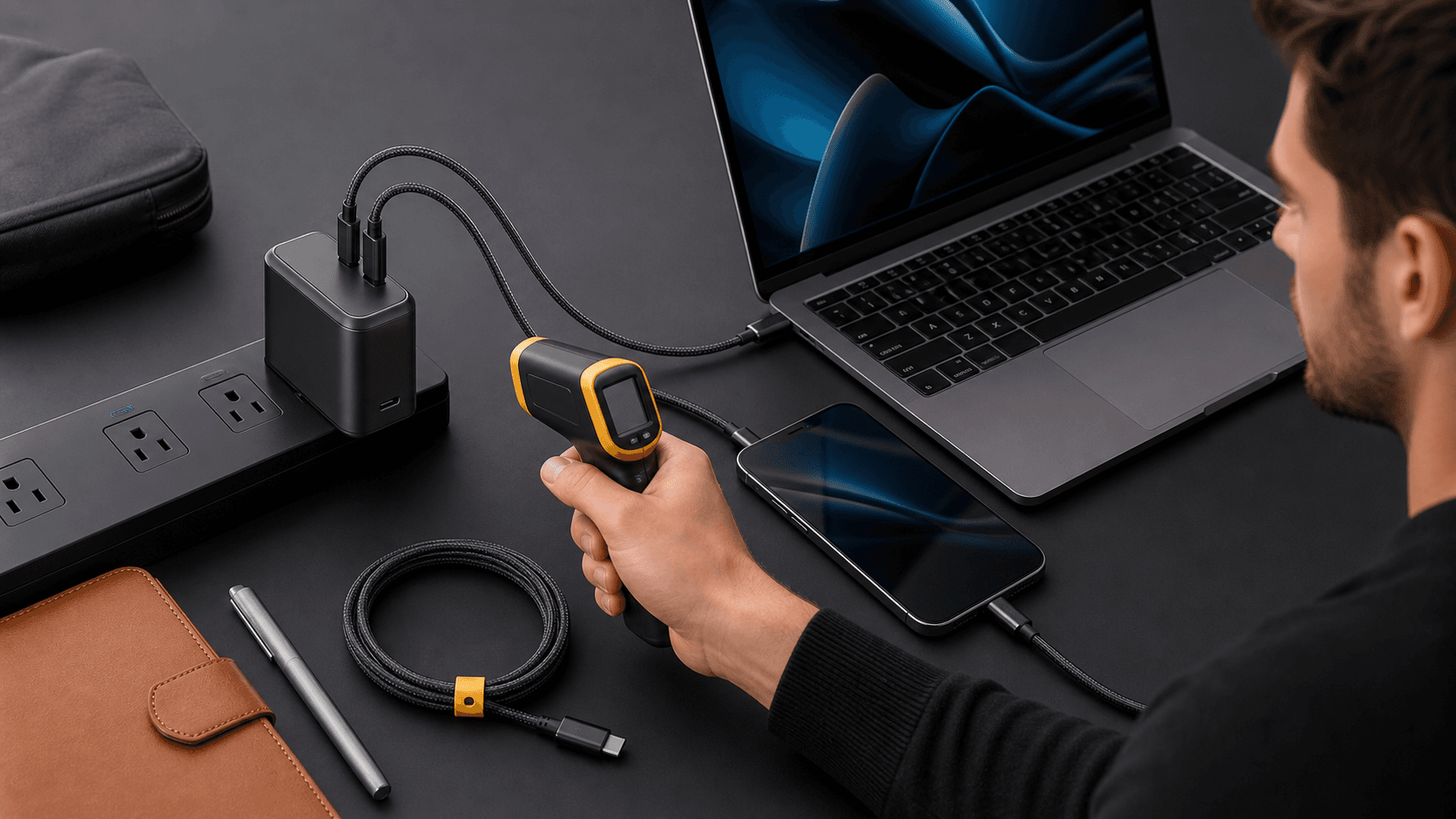
All chargers will feel warm when they are working hard. Warm to the touch is normal; painfully hot, with plastic discolouring or a burning smell, is not. Common red flags often come from cheap, no-name chargers that cut corners on components, clear labelling and internal protections, not from the GaN material itself.
Quality GaN chargers typically include:
- Over-current protection, to stop too much power flowing to your device
- Over-voltage protection, to keep output within safe limits
- Short-circuit protection, to shut down if something goes wrong
- Temperature monitoring, to keep internal heat in check
- Automatic cut-off, so charging stops when it should
Our approach with GaN chargers like the Zeus 280W is to pair high performance with safety-focused design and testing suitable for regular travel. That means paying attention to heat management, component quality and international standards so people can charge laptops and phones with confidence in hotel rooms, cafes and airports.
Safety Standards, Certification and Brand Quality
When you see safety certifications on a gallium nitride charger, you are looking at confirmation that the product has been tested against recognised standards. Third-party labs check things like insulation, fire resistance, electromagnetic interference and how the charger behaves under stress. For buyers, this is one of the clearest signals that a charger is a safer choice for your laptop and phone than an unmarked, generic brick.
Some of the labels you might notice include:
- CE for products sold into Europe
- FCC relating to electromagnetic emissions
- RCM for electrical safety in Australia and New Zealand
- UL or similar marks from safety testing organisations
For Australian travellers, these markings matter because they show the charger is designed with global use in mind. Reputable brands choose consistent materials and internal components, and use firmware-based protections to manage how power is delivered over USB ports. Cheaper, unbranded chargers often skip these steps, which is where many horror stories come from.
As an Australian-owned company, we build GaN chargers for real multi-device, travel-heavy use, then test them to make sure they stand up to that kind of life. A high-output unit like the Zeus 280W is not just about headline wattage, it is about managing that power safely while people plug and unplug different devices throughout their day. You can learn more about our design approach across chargers, power banks and cables at Chargeasap.
Using a GaN Charger Safely with All Your Devices
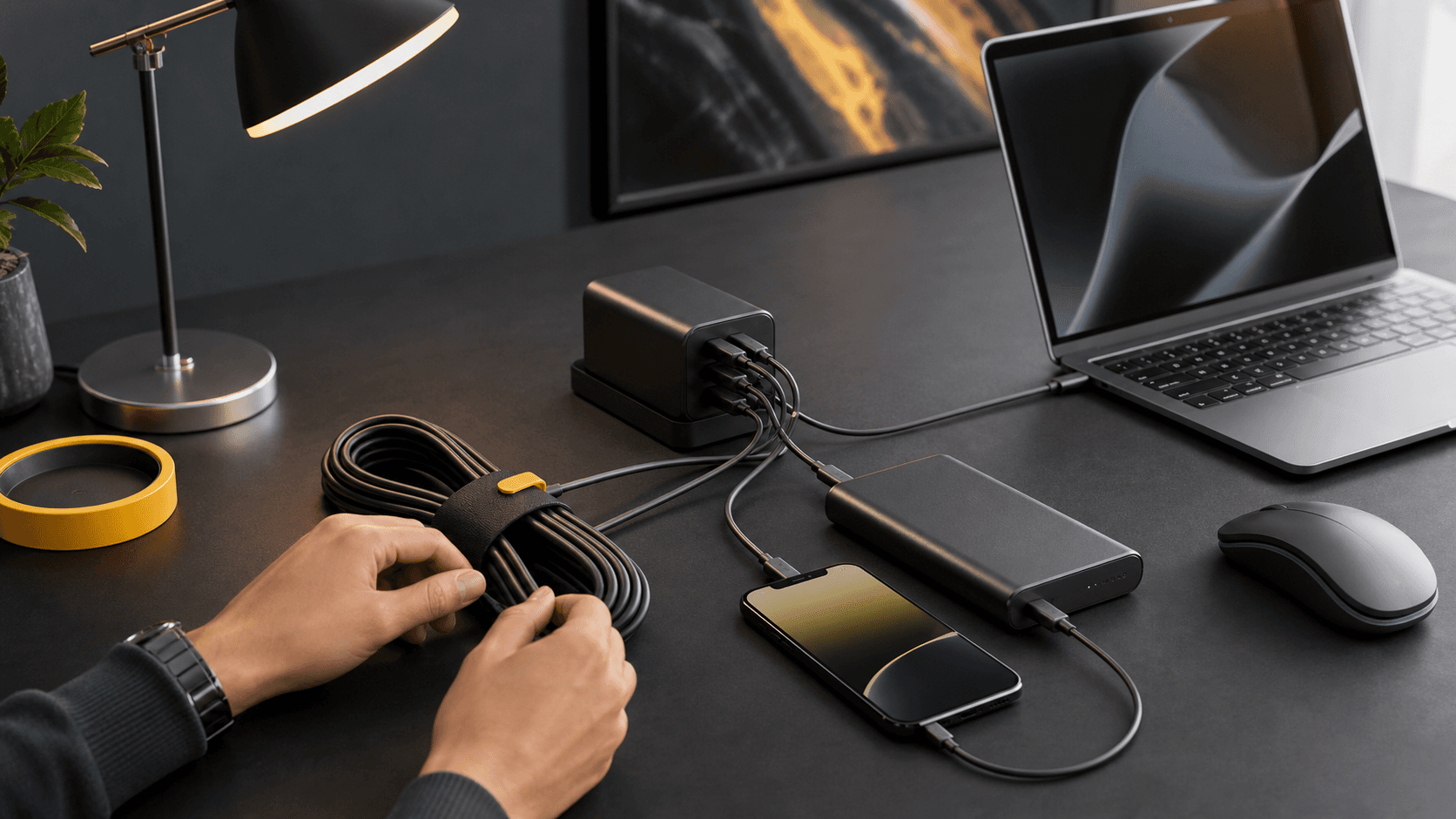
Multi-port GaN chargers such as the Zeus 280W are designed with intelligent power distribution. The charger detects what is connected, then allocates power so each device gets what it can safely accept, without overloading any single port. Your laptop might draw higher wattage on one USB-C port, while your phone, tablet and earbuds share the remaining capacity on other ports.
To use a GaN charger safely, a few simple habits help a lot:
- Avoid covering the charger with clothes or bedding so heat can escape
- Give it a bit of airflow, especially during high-power laptop charging
- Plug straight into the wall where possible, not into weak adapters or loose power boards
- Use quality USB-C cables rated for the wattage you need
Many people worry about leaving chargers plugged in or devices charging overnight. With a quality GaN charger and modern devices, this is generally fine, as both sides have built-in protections once the battery is full. It still makes sense to unplug if you notice unusual heat, damage to cables or a loose outlet.
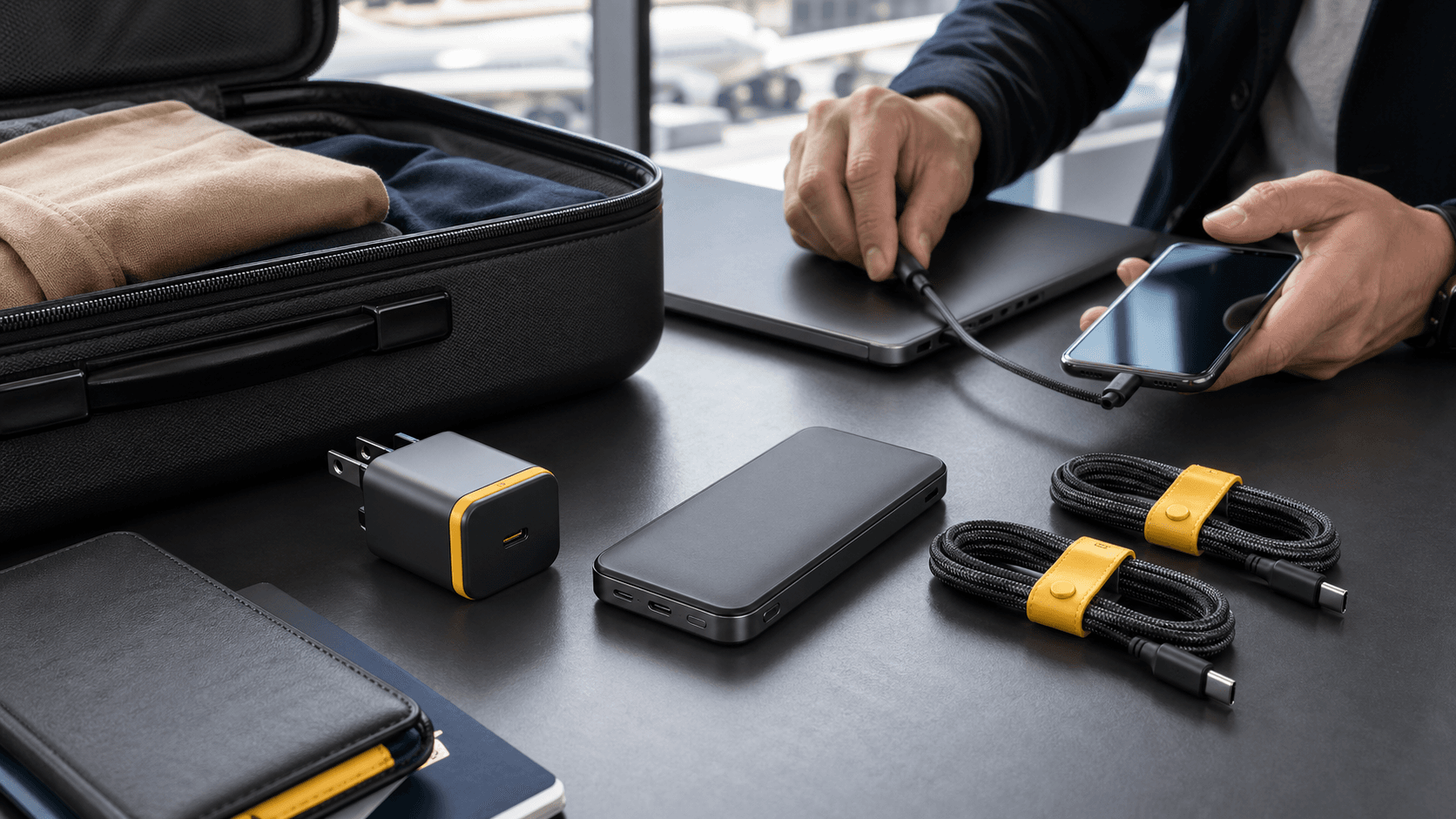
For travel, safe habits include checking that your plug adapter fits firmly and is rated for the local voltage, and avoiding stacking multiple questionable adapters together. Often, carrying one well-engineered GaN travel charger that can handle all your devices is safer and simpler than juggling a handful of random bricks collected over the years. A single, compact, high-output option like the Zeus 280W GaN travel charger fits this role well for frequent flyers and remote workers.
How to Choose a Safe GaN Charger You Can Trust
When you are choosing a gallium nitride charger, a quick checklist helps filter out the risky options:
- Clear power ratings printed on the charger and packaging
- A brand you recognise, with real product information
- Visible safety markings and certifications
- Solid-feeling construction, not cheap, creaky plastic
- Transparent details about ports, wattage and compatible devices
Matching a GaN charger to your gear starts with your laptop. Check its required wattage, then look for a charger that can comfortably supply that on one port, while still leaving headroom for your phone and other devices. Think honestly about how many ports you actually use at once when travelling or working remotely.
As a brand, we focus on GaN chargers, power banks and magnetic cables designed around travellers, digital nomads and tech-heavy setups. For people who want to replace multiple laptop and phone chargers with one compact solution, starting with a proven, high-output GaN charger like the Zeus 280W is a practical way to reduce clutter without sacrificing safety.
Charge with Confidence Wherever You Work and Travel
So, are GaN chargers safe? When you choose a quality, certified brand and use the charger as intended, the answer is yes. Gallium nitride is more efficient than old silicon bricks, which means smaller chargers, less wasted heat and cleaner power for the devices you rely on.
For frequent travellers and multi-device users, that translates into lighter bags, fewer chargers to remember and faster, more reliable charging in hotel rooms, airports and co-working spaces. It is worth taking a moment to review your current setup, retire the sketchy no-name bricks and move to a trusted GaN solution like the Zeus 280W GaN charger from Chargeasap for a safer, more streamlined, travel-ready kit.
Power Your Devices Smarter And Travel Lighter
If you are ready to cut down cable clutter and bulky bricks, our gallium nitride charger is designed to keep your everyday tech powered efficiently. With fast charging in a compact form, it is ideal for your home, office or travel bag. At Chargeasap, we focus on reliable, future-ready charging so you can plug in with confidence wherever you are. Upgrade your setup today and experience the difference smarter power management can make.