Why Travellers Are Rethinking Their Apple Chargers
If you travel with a MacBook, iPhone, iPad and earbuds, you know how quickly your bag fills with Apple bricks and tangled cables. Every device wants its own charger, every outlet is in the wrong spot, and you end up crouched behind hotel furniture trying to make it all work. At some point the question pops up: is there a smarter way to power everything than carrying half a power board in your backpack?
That is where the gallium nitride (GaN) charger comes in. A GaN charger swaps the old silicon guts of a power adapter for a newer material called gallium nitride so it can be smaller, run cooler and still push serious power. In simple terms, you get more power in less space. For frequent flyers, digital nomads and remote workers, the difference is very real in terms of weight, ports and flexibility.
At Chargeasap, GaN gear is designed in Australia for people who basically live out of carry-on, and the Zeus 280W GaN charger is a clear example of how one charger can replace a whole pile of Apple adapters.
How GaN Chargers Work Compared to Standard Apple Bricks
Gallium nitride is a semiconductor material that can handle high voltages and fast switching more efficiently than traditional silicon. In plain English, it lets charger components be packed much tighter without turning into a mini hotplate. That is why a good GaN charger can be smaller and lighter than an older-style charger that delivers the same, or even higher, wattage.
This difference shows up in a few obvious ways:
- Size: less internal bulk means the body of the charger can shrink.
- Heat: higher efficiency means less power is wasted as heat.
- Power delivery: designers can push higher wattages in a similar or smaller footprint.
For Apple users, the key point is that a GaN charger is not some mysterious new standard. Quality models still speak the same languages your devices expect, like USB-C Power Delivery (USB-C PD). That means your MacBook, iPad and iPhone negotiate the right voltage and current, just as they do with Apple’s own adapters. A well-designed GaN charger behaves like a smarter, stronger version of the familiar white brick, not a risky experiment.
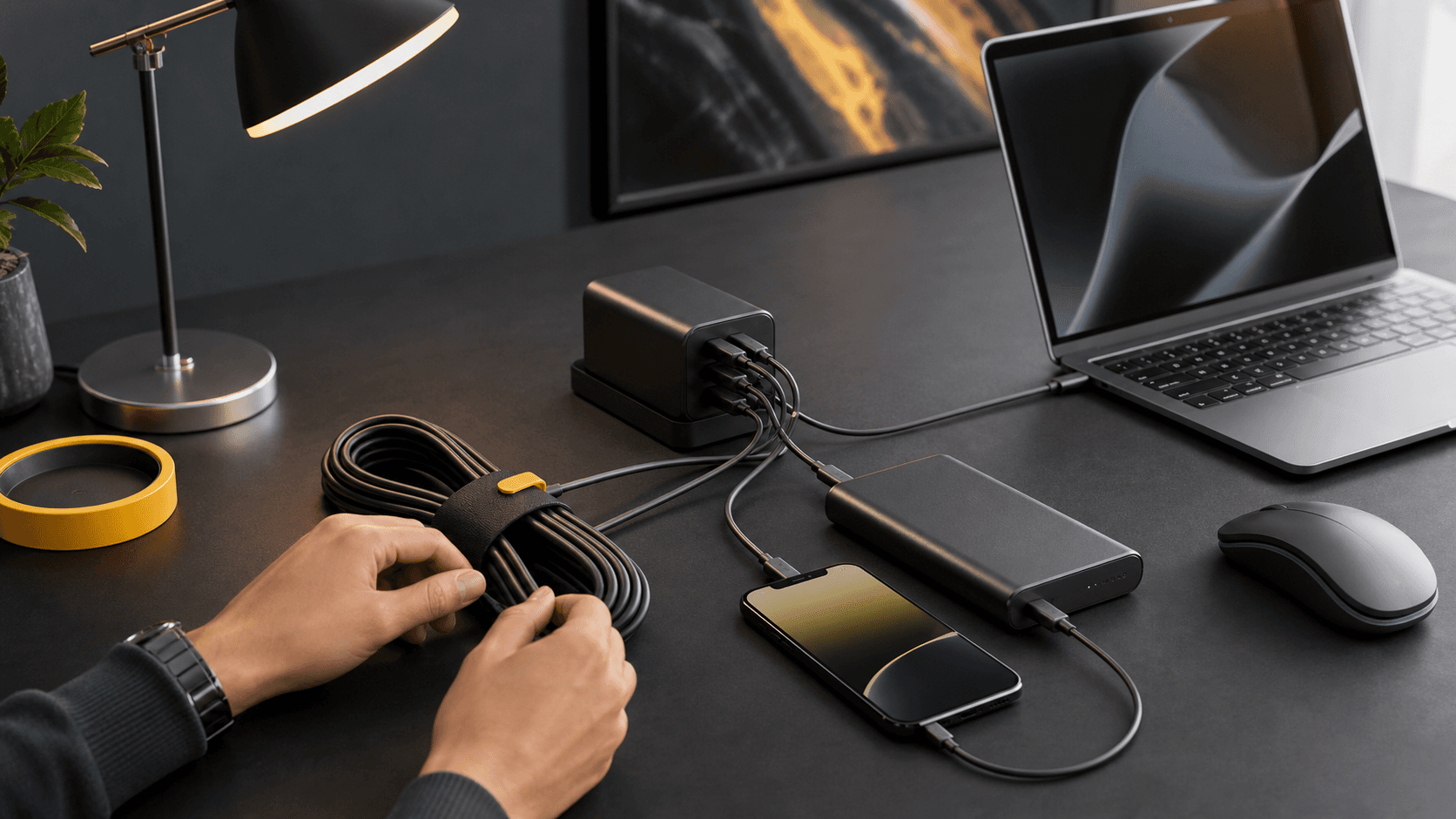
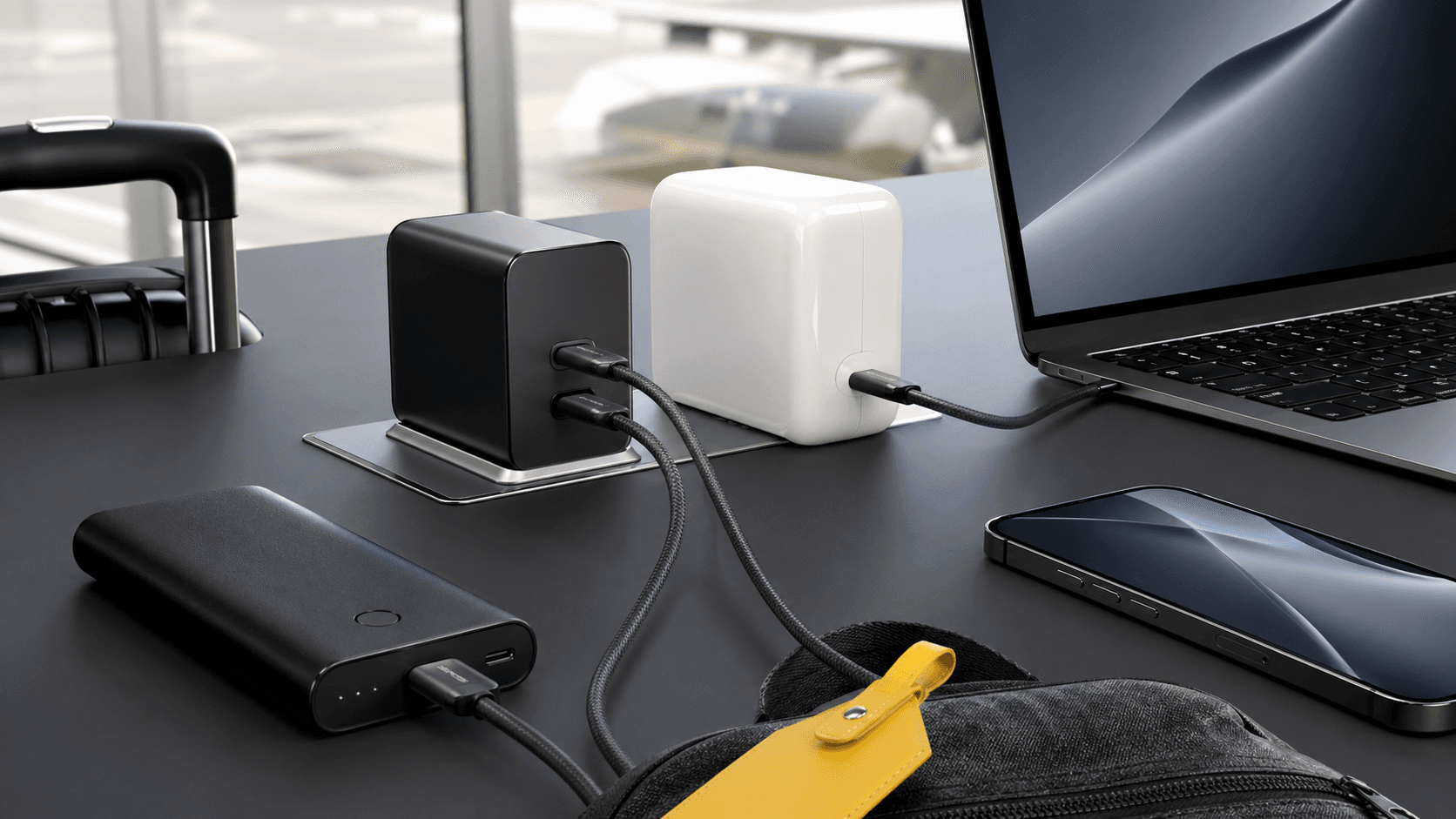
Where things get interesting is multiport charging. Instead of one chunky Apple adapter per device, you can have a single GaN charger with multiple USB-C and USB-A ports that share a large power budget. Gear in the Zeus 280W class can comfortably feed a laptop, tablet, phone and earbuds at once, so the whole tech kit runs from a single wall outlet rather than three or four separate bricks.
Size, Ports and Power You Will Actually Notice
Lay out a typical travel charging kit and it adds up fast. A MacBook charger, an iPhone charger, maybe an iPad charger, plus a spare adapter for accessories. Even before you add cables, that is a chunk of weight and space that could have been clothes or camera gear.
A single high-powered GaN charger lets you consolidate. The practical differences are easy to feel:
- Less bulk: one compact brick instead of a stack of separate adapters.
- More ports: multiple USB-C and often USB-A ports in one unit.
- Better outlet sharing: one wall socket to run your whole setup.
Wattage is where many people get confused, so here is a simple way to think about it.
- 20W: fine for phones and smaller tablets, slow or useless for most laptops.
- Around 60 to 70W: good for many ultraportable laptops and faster tablet charging.
- 100W and above: needed for larger laptops, plus charging several devices at once.
A GaN charger with a high total wattage can split that power across devices, so your MacBook gets the headroom it needs while your iPhone and earbuds still charge at sensible speeds. For travel, this means fewer compromises. You do not need to choose between charging your laptop overnight or your phone quickly before a flight, because one charger can handle both in parallel. Less clutter around tiny hotel desks and airport sockets is a nice bonus.
Speed, Safety and Battery Health for Apple Devices
When you plug an iPhone or MacBook into a quality GaN charger, the charging speed is mostly limited by the device itself. If your iPhone supports fast charging via USB-C PD up to a certain wattage, a compatible GaN charger will let it reach that limit just like an official Apple adapter. For MacBooks, as long as the charger can deliver the wattage the laptop expects, you will see similar performance to the Apple brick, sometimes with more flexibility thanks to extra ports.
Safety is where many people get the most concern, and that is fair. The good news is that reputable GaN chargers build in protections such as:
- Over-current and over-voltage protection.
- Short-circuit protection.
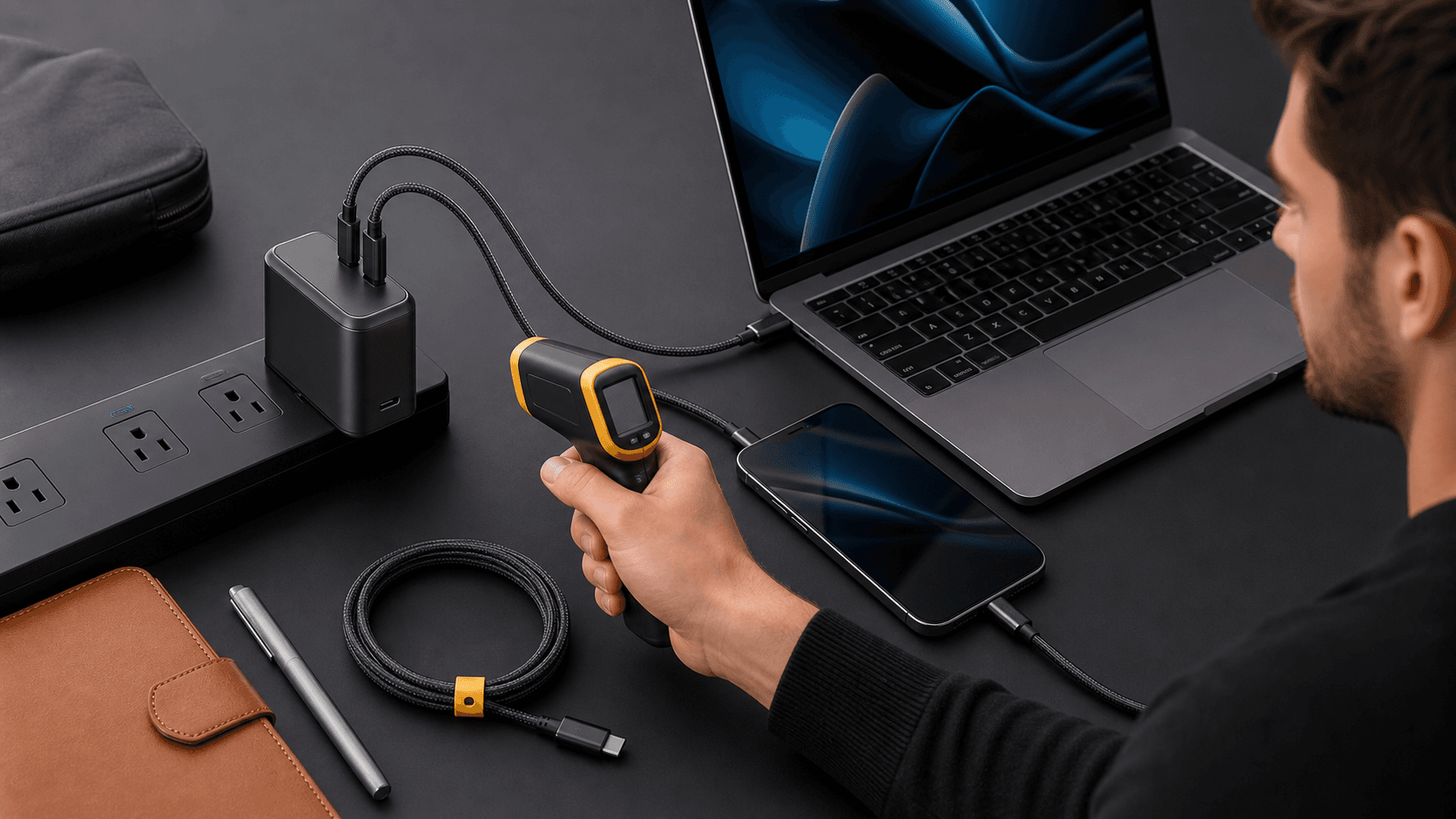
- Temperature monitoring to keep heat in check.
- Compliance with recognized safety standards and certifications.
Products designed to handle high output, like a multi-port GaN workhorse such as the Zeus 280W, are usually engineered to distribute power intelligently and avoid overheating, even when everything is plugged in at once.
Battery health myths often come from a misunderstanding of how USB-C PD works. Your device and charger talk to each other and agree on a safe charging profile. A higher maximum wattage on the charger does not force extra power into your battery, it just means there is more available if a laptop or tablet can use it. As long as the charger follows the proper standards and comes from a trusted brand, it will not overcharge or damage your Apple gear.
One last piece of the puzzle is cable quality. A weak or cheap USB-C cable can limit power or get worryingly warm. For best results:
- Use cables that clearly state their power rating.
- Match higher wattage chargers with cables rated to handle that load.
- Replace frayed or kinked cables rather than nursing them along.
Is a GaN Upgrade Worth It for Your Setup?
Not everyone needs to replace their Apple charger. If you mostly stay at home, own a single iPhone and maybe an iPad, and you are happy with your current speeds, your standard adapters are probably fine. They do what they are meant to do, and you might never hit their limits.
The upgrade starts to make sense when your setup looks more like this:
- You carry a MacBook, phone, tablet and earbuds most days.
- You work from cafes, coworking spaces or client sites.
- You travel regularly and live out of a backpack or carry-on.
In those cases, a single high-powered GaN charger can genuinely simplify life. Instead of buying extra official Apple chargers for office, home and travel, you invest once in a charger that covers all your current devices and has headroom for future ones. That is useful as laptops, tablets and even phones gradually draw more power over time, and USB-C becomes the standard across almost everything.
Thinking long term, a multiport GaN charger can be a piece of core kit that stays with you through several device upgrades. As you replace an older MacBook with a more power-hungry model or add another tablet to your workflow, having a charger that already supports higher wattages means you are not starting from scratch. Chargers in the Zeus 280W range are built with that kind of headroom in mind.
How to Choose the Right GaN Charger for Apple Devices
The best way to pick a GaN charger is to work backwards from how you actually use your tech. Start with a quick checklist:
- What devices do you own now, and what might you add soon?
- How many need to be charged at the same time regularly?
- Do you move around a lot, or are you mostly desk-based?
- Are you trying to minimise weight, wall sockets or both?
If you mainly use a phone and a tablet, a compact single or dual-port GaN charger with moderate wattage may be all you need. It will still be smaller and more travel-friendly than carrying multiple Apple adapters. On the other hand, if you rely on a laptop for work and often run several devices at once, a multiport charger with a high total output, like those in the Zeus 280W category, will give you much more breathing room.
Key features to look for include:
- Clear labelling of wattage per port so you know what each can handle.
- Travel-friendly design, such as compact dimensions or folding plugs.
- Sturdy build quality that can cope with daily bag life.
- Safety certifications and protections clearly listed.
Thinking of your charger as travel infrastructure rather than a throwaway accessory changes the decision. This is the bit of gear that keeps your entire digital life powered up in hotel rooms, airport lounges and shared workspaces, so it is worth choosing something that matches how hard you push your devices.
Make Your Charger Work as Hard as Your Devices Do
The choice between GaN charger vs Apple charger is not really about brand loyalty. It is about whether your power setup fits the way you live and work. If you own a single device and rarely leave home, the included Apple adapters are perfectly serviceable.
If you run a small ecosystem of Apple devices, travel often or are tired of carrying a nest of white bricks, a good GaN travel charger is usually a practical upgrade. One charger, multiple ports, enough wattage to share and less weight in your bag. A quick audit of what you carry and how you charge will tell you whether consolidating into something in the Zeus 280W class or another GaN option makes sense, and whether your next trip could be a bit lighter, simpler and less tethered to scarce power points.
Power Your Devices Smarter And Travel Lighter
Choose Chargeasap’s gallium nitride charger to get fast, reliable charging in a compact size that actually fits your everyday carry. With advanced GaN tech, you can keep your phone, tablet and other essentials powered up without bulky bricks weighing you down. Make the switch today and enjoy a more efficient, clutter free way to stay charged wherever you are.