When Your GaN Charger Meets a Power-Hungry Trip
Overloading a GaN charger on the road is easier than most people think. One busy night in a tiny hotel room, every outlet is full, all your devices are flat, and you end up stacking adapters, cables, and power boards into one small charger. That is when things start cutting out, getting hot, and acting strange.
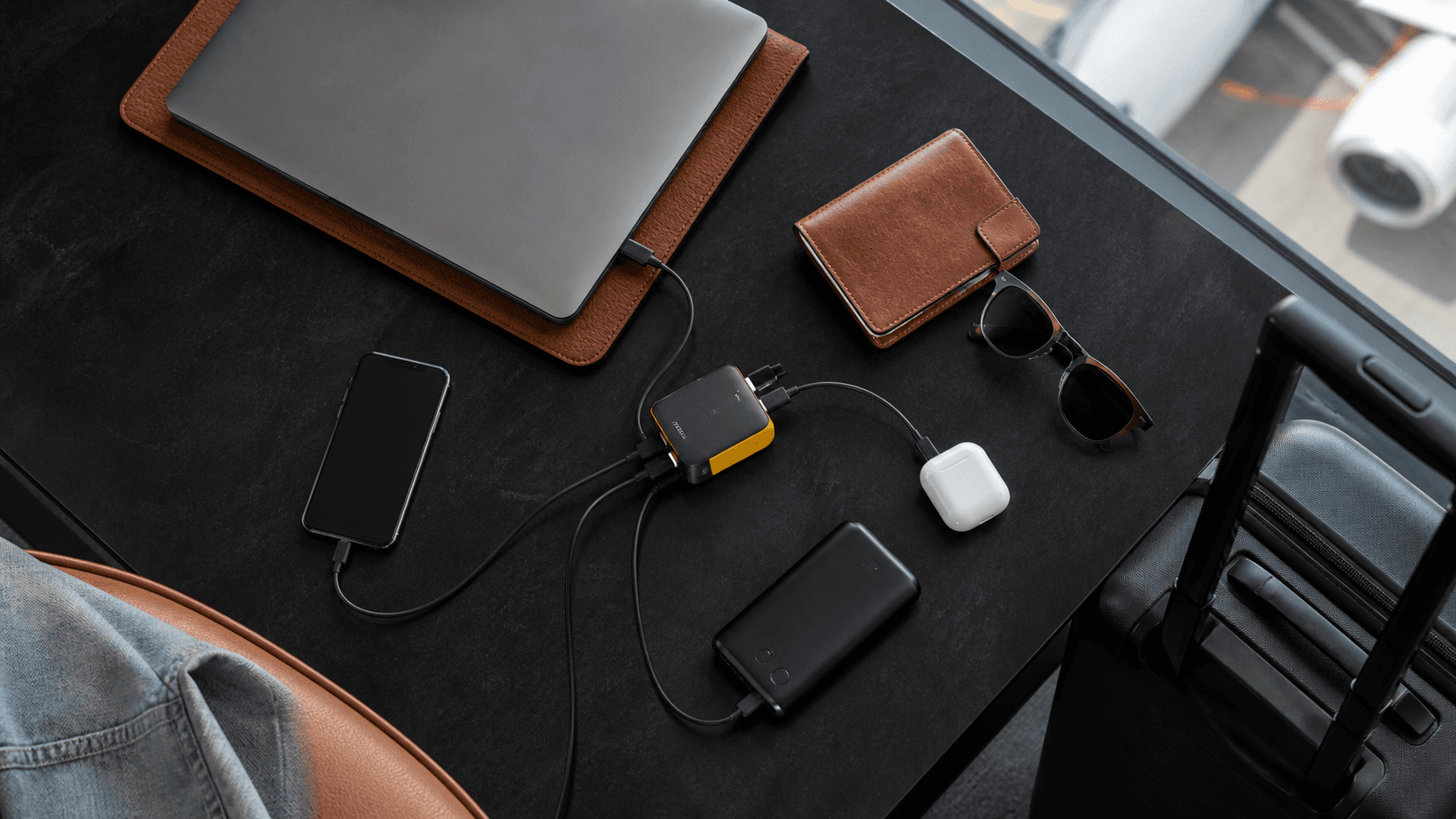
We want to help you avoid that. Here we will break down what overload really is, what your GaN charger does to protect itself, the warning signs you will see before anything serious happens, and how to pack and use a powerful travel charger safely. We will also share how a high-output charger, like a 280W GaN unit such as the Zeus 280W, can actually make travel easier instead of riskier when you treat it right.
What Overloading a GaN Charger Really Means
Overload simply means you are asking the charger to give out more power than it is designed to handle. It is like trying to tow a caravan with a small hatchback. You can hook it up, but the car will struggle. With a GaN charger, it might be too many devices at once, or one hungry laptop plus a few extras.
GaN stands for gallium nitride. It is a different material to the old silicon bricks most of us grew up with. GaN parts can switch power very fast, lose less energy as heat, and let the charger be smaller and lighter. That is why GaN chargers, like the Chargeasap Zeus 280W, work so well for travel, whether you are heading from Australia to a European winter or chasing the dry season around Asia.
On a multi-port charger, the total wattage is shared. If a charger is rated to 280W total, it does not mean every port can do 280W. It usually looks more like this:
- One or two high-power USB-C ports for laptops
- A mid-power USB-C port for tablets or phones
- One or two USB-A ports for smaller gear
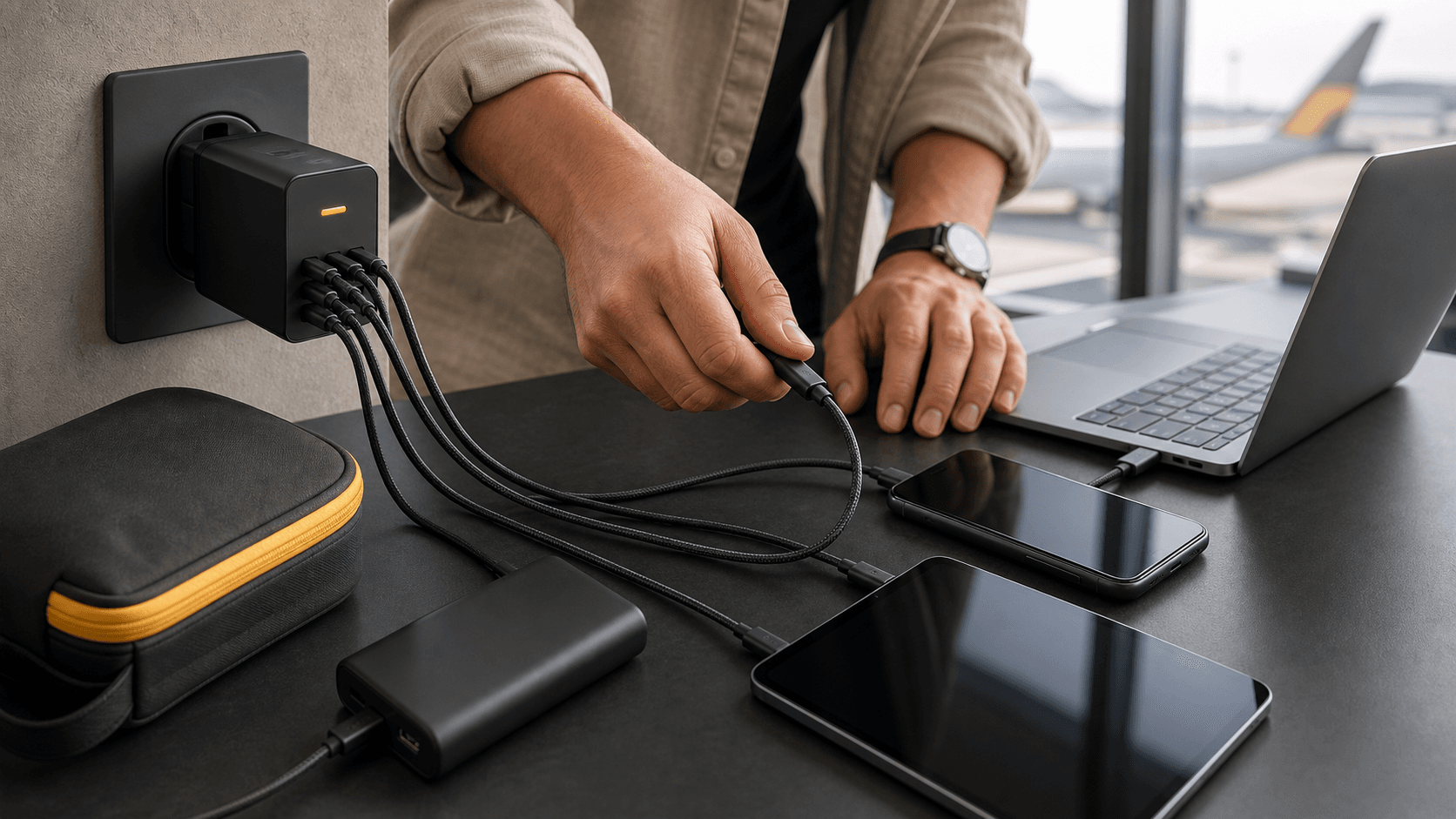
The charger and each device talk over USB Power Delivery (USB PD). In simple terms, they negotiate how much power is safe and needed. Your laptop might ask for 100W, your phone 27W, your tablet 30W, and so on. If the total request stays under 280W, you are fine. If all those requests add up to more than the charger can give, you hit overload.
A common myth is that a big GaN charger forces too much power into your gadgets. That is not how it works. Devices pull what they are designed to take. The only time you run into trouble is when the sum of all the pulls is higher than the total the charger can safely deliver.
Real-World Warning Signs Your Charger Is Overloaded
On the road, overload rarely looks dramatic. It is more like a bunch of small annoyances that keep popping up when you are already tired from travel.
You might notice:
- Your laptop makes the connect chime, then disconnects, then reconnects repeatedly
- One or more ports cut out for a moment, then start again
- Your phone or tablet charges, but the percentage barely moves
Modern GaN chargers have a stack of protections built in, like:
- Overcurrent protection if a port is asked for too much power
- Overvoltage protection if something goes out of normal range
- Short-circuit protection if a cable fails
- Thermal protection if things get too hot
Instead of failing in a big way, the charger will usually reduce output or shut down for a few seconds, then try again. That is a good thing, especially if you only packed one charger for your whole kit.
Heat is another big signal. A GaN charger will feel warm when pushing a lot of power. That is normal on a busy night in a hotel, or when everyone is topping up in a campervan. It becomes a problem if the case is too hot to keep your fingers on for long, especially if:
- The charger is wedged behind a bed or sofa
- It is under a pillow, blanket, or jacket
- It is plugged into a loose adapter hanging off the wall
Smart multi-port chargers try to handle overload by being clever with power sharing. They might give priority to the laptop port, then slow down or drop the lower-power ports. So if your earbuds stop charging but your laptop keeps going, that is often the charger protecting itself and your devices.
Worst-Case Scenarios: What Can Actually Go Wrong
With a quality GaN charger, true disasters are rare. They are built to fail safe. Still, overload mixed with bad cables or sketchy adapters can make travel more painful than it needs to be.
Real risks look like this:
- Your laptop losing power mid-video call or while you are editing work files
- Older or cheaper devices getting stressed by power cutting in and out all night
- A weak hotel power board or wall socket tripping a breaker when combined with heaters, kettles, or hair dryers
The key safety difference is between a certified charger from a known brand and a random no-name brick. Good chargers are designed to shut down or limit their output instead of melting, warping, or burning. They are built with proper spacing inside, sensible layouts, and firmware that watches for trouble.
Cables and travel adapters are often the hidden weak link. Problems grow when you:
- Use cheap USB-C cables that are not rated for high power
- Stack a universal plug into another adapter, then into a wobbly wall socket
- Plug into old or cracked outlets in older hotels
In those cases, the charger might be fine, but the poor connection creates heat or arcing at the wall. That is not something you want in a small hotel room or a packed ski lodge.
How to Safely Max Out a GaN Charger While Travelling
A little planning goes a long way. Think of it as a simple charging strategy for each night on the road.
Start by prioritising your big devices:
- Put your laptop on the highest-rated USB-C port
- Put your main phone on the next-strongest USB-C port
- Move slower gear like earbuds, watches, and e-readers to the remaining ports
- Charge power banks and spare devices after your main work tools are topped up
When you look at a charger, check:
- Wattage per port, for example, up to 100W on a laptop port
- Total wattage, for example, 280W shared across all ports
- Labels like USB C1, C2, C3 that show which port is strongest
If your laptop came with a 100W charger, try to match that on one of the USB-C ports, not on a shared low-power port. Your laptop will run cooler and charge faster, and the charger will not have to reshuffle power as often.
Some handy packing tips:
- Carry at least one USB-C cable rated for 100W or more
- Use a grounded, travel-rated adapter that fits firmly in local sockets
- Give the charger space on a desk, bench, or floor, not buried under clothes or bedding
Mid-year trips from Australia to the Northern Hemisphere often mean long flights, jet lag, and lots of indoor time, from mountain lodges to humid city hotels. Having one powerful GaN charger that can handle your laptop, phone, tablet, and earbuds, without wheezing, makes those nights smoother. A compact, high-output option like the Zeus 280W GaN charger is built with exactly this kind of multi-device travel in mind.
Choose the Right GaN Charger for Life on the Road
When you pick a travel GaN charger, a quick checklist helps:
- Enough total wattage for your laptop plus at least two other devices
- More USB-C ports than USB-A ports, since most new gear is USB-C
- Clear safety markings and quality build
- A compact body that fits in your tech pouch or carry-on
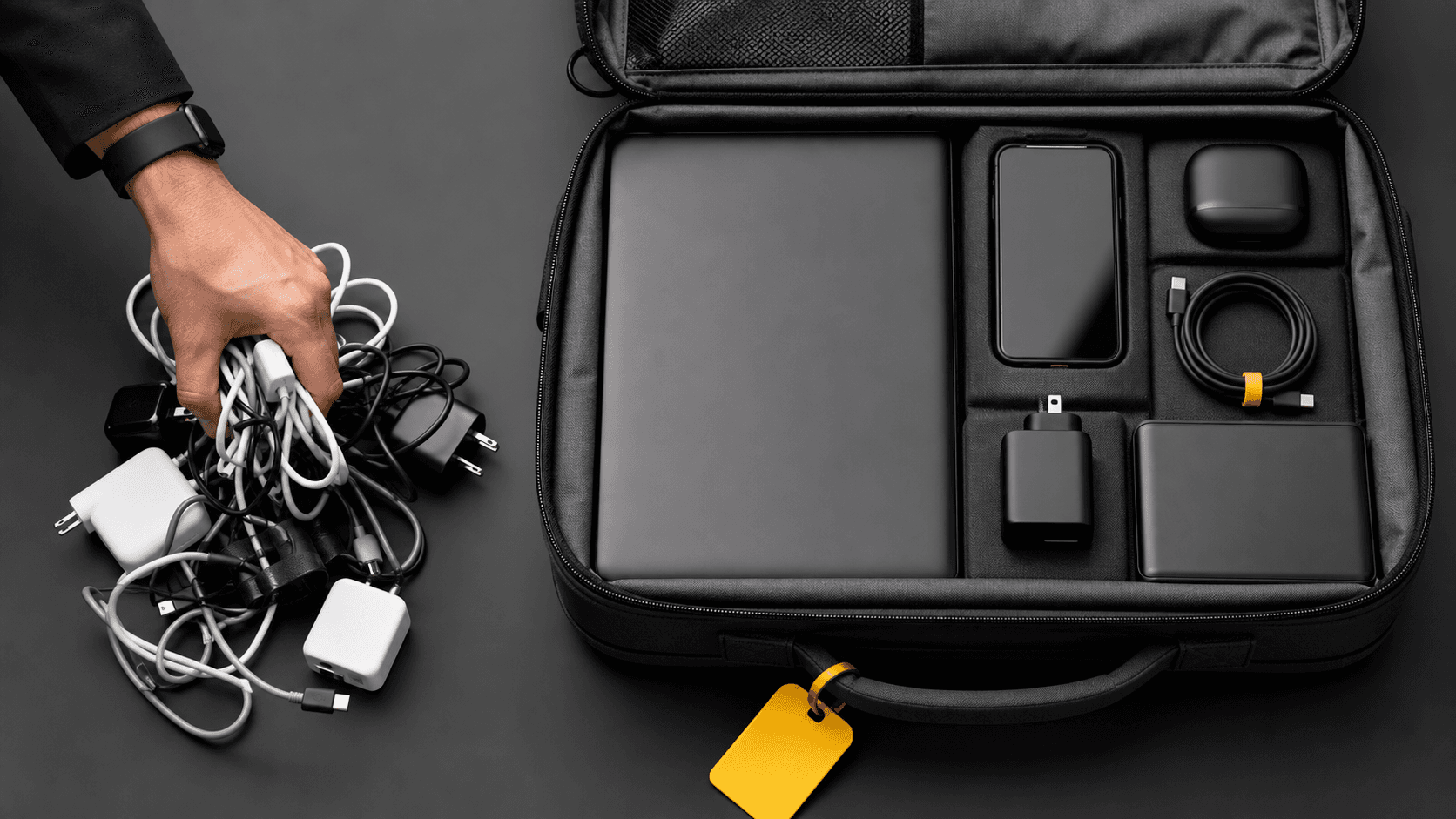
A high-power unit in the 280W range is built for people who travel with a full setup, like a big laptop, phone, tablet, and audio gear, and want everything running at once. Instead of carrying two or three original chargers, you carry one compact GaN brick and a few good cables. The Chargeasap Zeus 280W is a good example: multiple USB-C ports, high total output, and a form factor that suits frequent travellers, digital nomads, and remote workers.
If your current charger always runs hot, drops devices, or leaves you fighting for outlets in hotels and co-working spaces, that is a sign it is working at its limit. Stepping up to a higher-capacity GaN charger from a trusted Australian brand like Chargeasap can cut the clutter, reduce overload issues, and give you more confidence every time you pack your bag.
Power Your Devices Smarter Wherever You Are
Stay fully charged on the go with our compact, travel-friendly GaN charger designed for modern Aussie lifestyles. At Chargeasap, we focus on delivering reliable, efficient charging that keeps pace with your busiest days. Upgrade your everyday carry with fast, safe power in a smaller, lighter form factor. Make the switch today and experience charging that actually keeps up with you.