Ditch the Brick Pile: Travel Lighter with One Charger
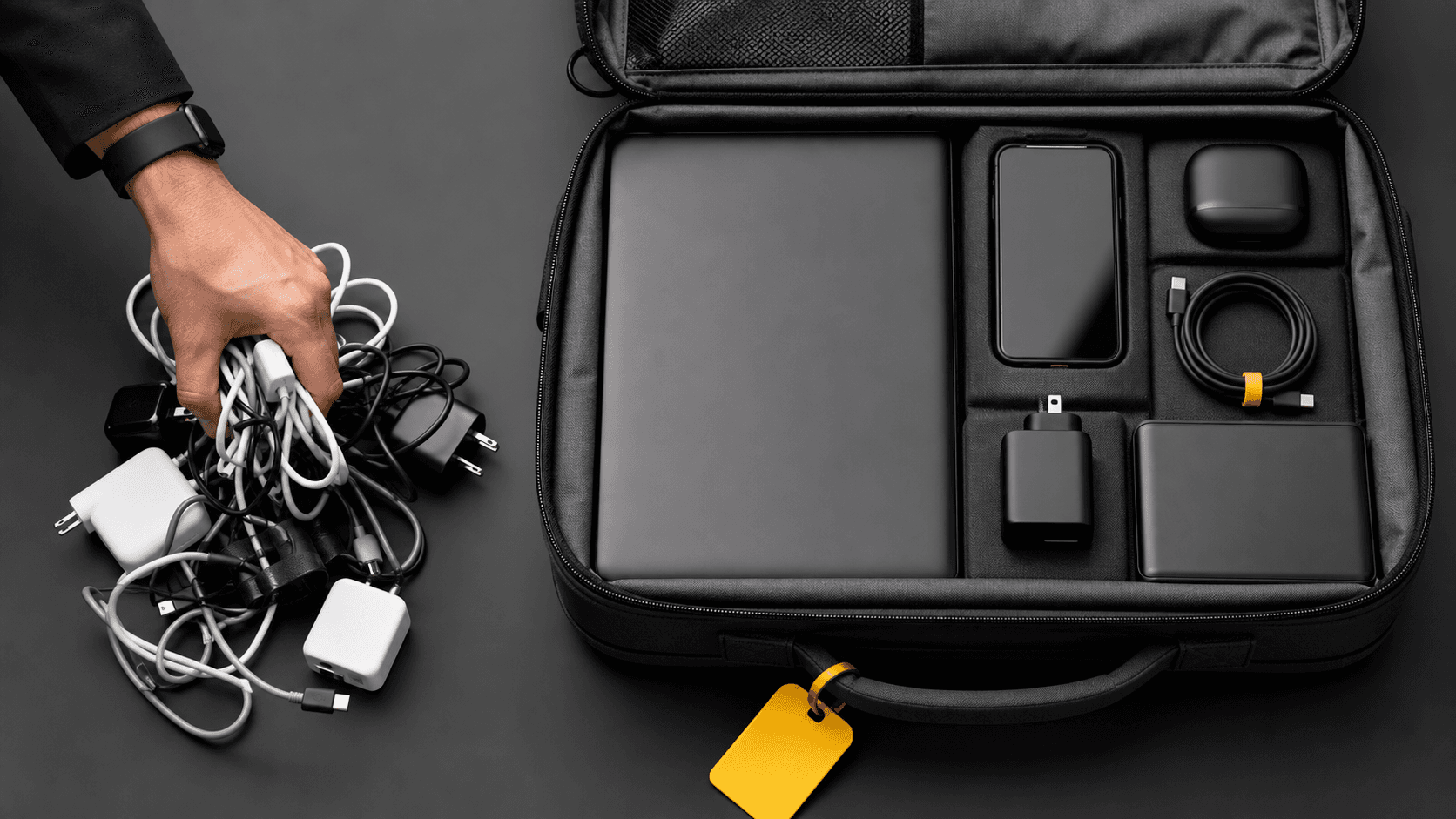
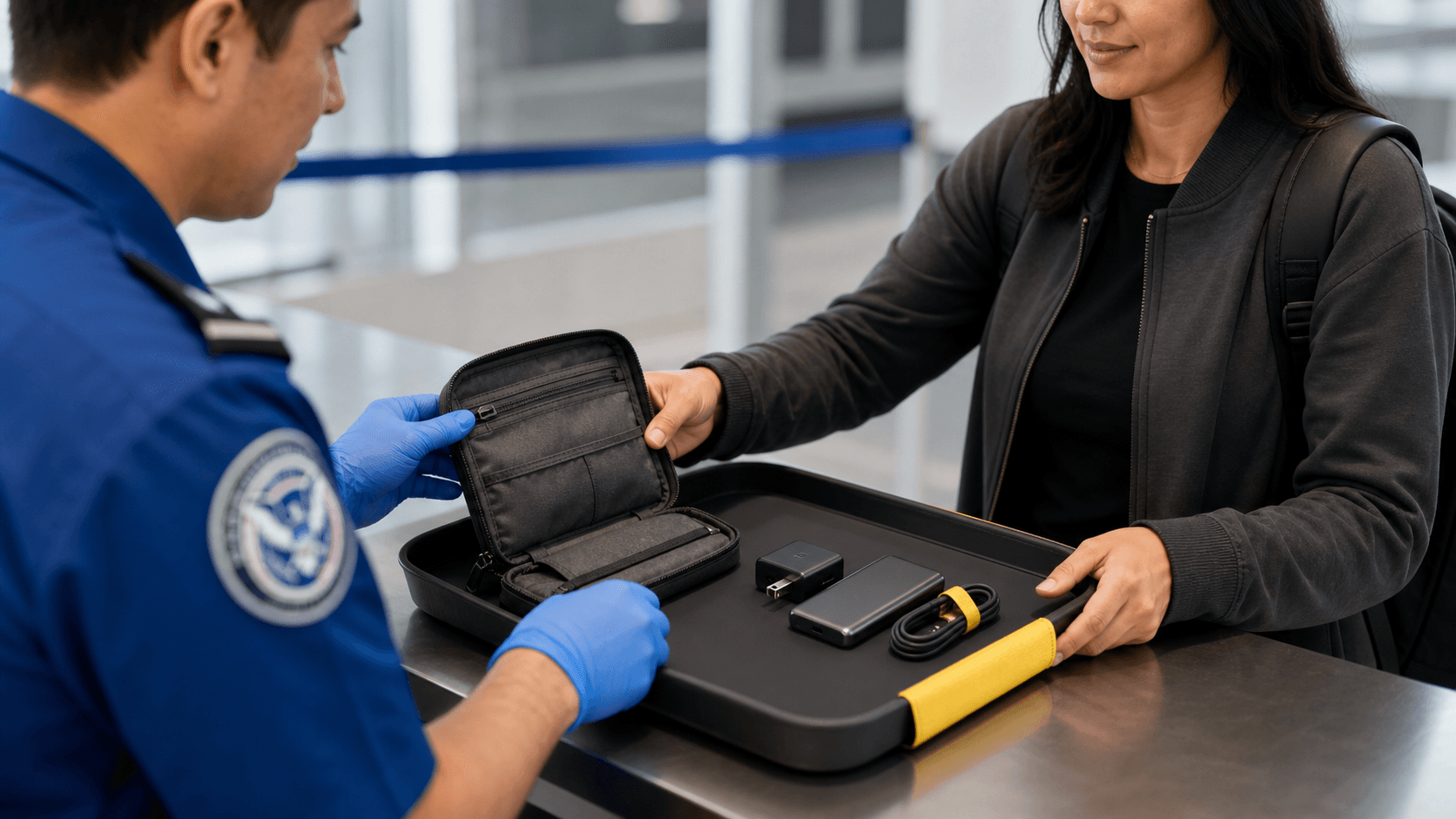
Packing tech for two people can blow out a bag fast. Two laptop bricks, two phone chargers, random cables, that old camera plug, and suddenly your carry-on is half power bricks and half tangled wires. When you are squeezing into economy seats, hunting for a free outlet in a crowded airport, or dealing with strict weight limits, that bulk really starts to hurt.
There is a better way. A one-charger travel kit means you and your travel partner share a single powerful charger, a tidy set of cables, and a simple plan for who plugs in where. It matters even more when both of you work on the road and cannot risk a flat laptop right before a meeting.
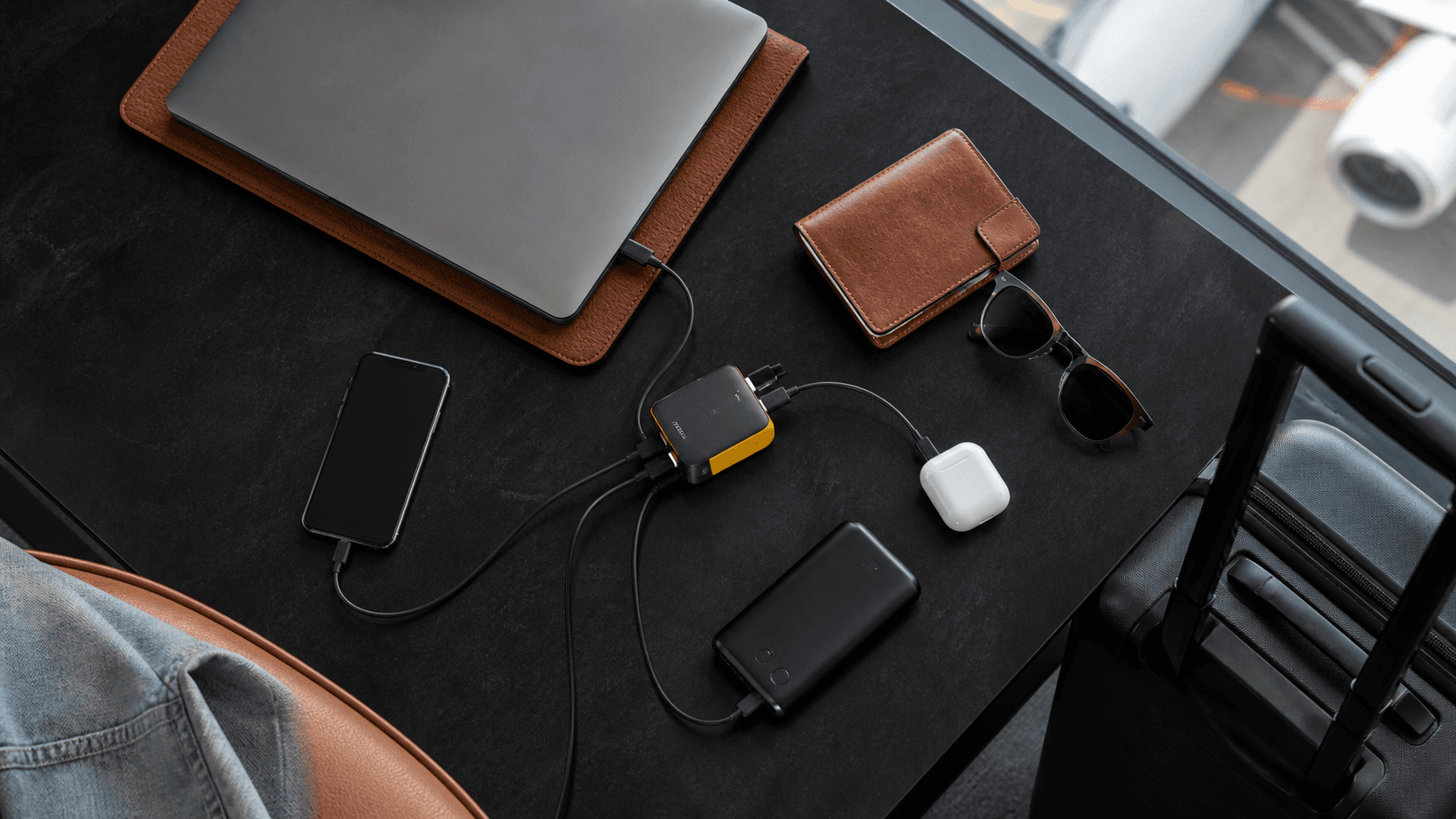
Modern GaN travel chargers now make the idea of one charger for all devices actually realistic. They are compact, powerful, and built to handle laptops, phones, and more at the same time. A good example is a high-output GaN unit like Chargeasap’s Zeus 280W GaN charger, which is designed specifically for multi-device, multi-person setups. We are going to walk through how to plan your ports, share cables without drama, and pack smart backups so you are covered even when things go wrong.
Why One Charger for All Devices Actually Works Now
Old laptop bricks are bulky for a reason. They are based on older silicon tech that needs more space and gives off more heat. GaN, or gallium nitride, is a newer material that lets chargers be smaller and more efficient while still pushing out a lot of power. In simple terms, GaN wastes less energy as heat, so you can fit the same (or more) power into a much smaller block.
With a high-watt GaN charger, like a 280W unit such as the Zeus 280W GaN charger, you do not need one brick per device. You get a shared pool of power that the charger splits across its ports. That is how one compact charger can comfortably handle two laptops, two phones, and smaller gear like earbuds for most people.
Think of it like this:
- USB C laptops: often need around 45 to 100 W each
- Phones: often happy between about 18 and 45 W
- Tablets: often land in the 20 to 45 W range
- Earbuds, watches, small accessories: usually sip only a few watts
If you have 280 W to share, there is plenty of headroom for two people. The charger manages power so higher priority ports get more wattage when needed. When you unplug a device, that power is freed up and shared across what is left.
People often worry that one charger will be too slow for two people. In normal daily use, it usually works fine, especially if you are smart about which ports go to which device. You can still fast charge phones and power both laptops, especially if one person is only browsing or doing light work.
Another common concern is safety, especially in older hotels or Airbnbs with dodgy-looking wall sockets. Modern GaN chargers include protections against overheating, overcurrent, and short circuits. Using one quality charger is usually safer than stacking a pile of random cheap adapters on a double adaptor. That is why choosing a well-designed charger from a specialist brand like Chargeasap matters.
Mapping Your Two-Person Device Load Before You Pack
Before you throw gear into your bag, it helps to be clear on what you are actually carrying. For both people, write down every device you plan to bring:
- Laptops
- Phones
- Tablets or e-readers
- Earbuds and headphones
- Smart watches or fitness bands
- Cameras, drones, or gaming devices
Next, split that list into primary and secondary devices.
Primary devices are the ones that must stay alive for work or key tasks, for example:
- Main laptops
- Main phones
Secondary devices can charge slower or overnight, for example:
- Earbuds and watches
- Extra phones or tablets for media
- E-readers
Now match those devices to rough power needs. You do not need exact numbers, just ballparks like we listed earlier. The goal is to see that your total active draw at one time is still within what a strong GaN charger can handle. A high-watt unit like the Zeus 280W GaN charger gives you a lot of margin here.
For two people, a common active setup looks like:
- Two laptops plugged in while working
- One or two phones fast charging
- One or two small devices quietly topping up in the background
A high-power GaN charger with multiple USB C ports can handle that pattern easily, especially if you let the low-power gear wait until night or until a laptop is unplugged.
Building a Shared Cable and Port Strategy That Works
Once you know your devices, it is time to plan how you use the ports. On a multi-port GaN charger, we suggest a simple rule:
- Top USB C ports: laptops first, then any other high-draw device
- Middle USB C ports: phones and tablets
- USB A ports: legacy gear, earbuds cases, small accessories
This way, your laptops always get first access to the highest power lanes, and phones still charge nicely without stealing too much. A charger like the Zeus 280W GaN charger is built around this kind of multi-device, multi-port use.
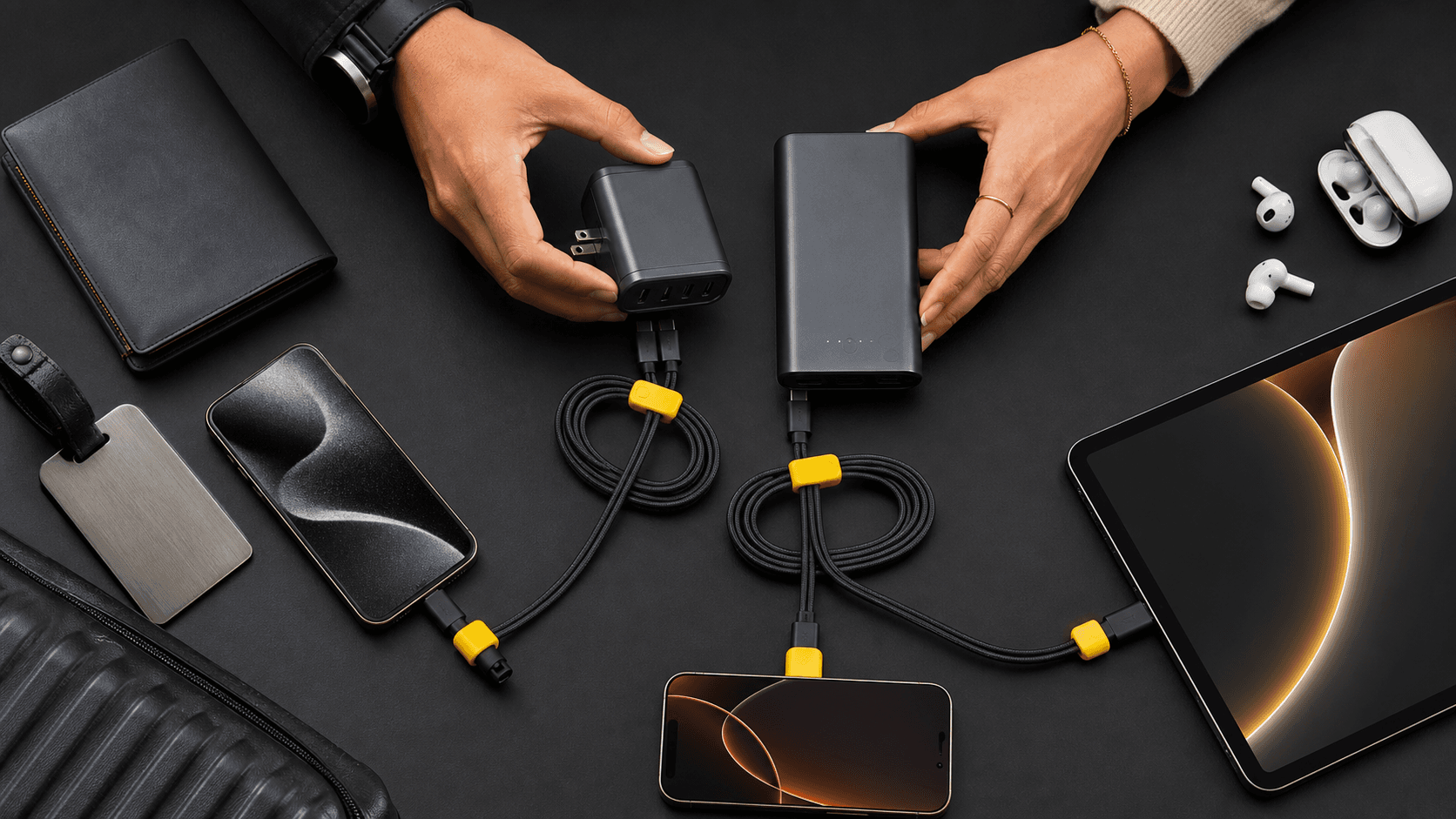
For cables, a minimal shared kit for two people might include:
- Two longer USB C cables for laptops and flexible use in rooms
- One or two shorter USB C cables for phones and power banks
- One USB C to Lightning cable if someone uses older Apple gear
- Optional magnetic cables if you like easy snap-on charging
Then set a few ground rules so no one feels cheated:
- Use time-boxed fast charging: for example, each person gets 30 minutes on a top port if both phones are low
- Charge secondary devices overnight on lower-power ports
- Agree that work laptops win priority during work hours
A tiny bit of planning here saves a lot of low battery stress later.
Smart Backups: Power Banks and Contingencies for Two
A one-charger travel kit is your core, but a slim power bank is your safety net. With a good USB C power bank, you can keep at least one laptop going a bit longer or keep both phones alive across a long flight or train ride.
Think about the likely problem spots:
- Delayed or diverted flights where you lose access to outlets
- Long regional drives with patchy power at stops
- Older hotels or guesthouses with only one free outlet in the room
In those cases, a simple setup works well:
- One high-power GaN charger as the main base in your room
- One USB C power bank that both of you share on the move
- One tiny backup plug-in adapter for emergency solo use
Because Chargeasap is based in Australia, we see a lot of travellers heading to both Northern Hemisphere summers and winter escapes. That often means crossing regions with different plug types. Before you go, make sure you have:
- A compact, reliable universal adapter
- A quick check that your GaN charger supports the local voltage
- A habit of avoiding cheap, unlabelled adapters that may risk your gear
If you get this right, your one-charger kit works in almost any hotel room, from humid beach stays to cold mountain cabins.
Turn Your Tech Pile Into a One-Charger Travel System
Shifting from one charger per device to one charger for all devices is mostly about mindset. Instead of packing every original brick, you plan a simple system that matches two people’s real needs, not just their tech habits from years ago.
A lean two-person packing checklist might look like this:
- One high-power GaN charger with multiple USB C and USB A ports (for example, the Zeus 280W GaN charger)
- Three to five quality USB C cables in mixed lengths
- Any special cables you still need, like Lightning or watch chargers
- One compact USB C power bank
- One reliable travel plug adapter
Before your next trip, do a test run at home. Plug in two laptops and two phones at the same time, see which ports charge what, and tweak your plan until it feels natural. Once you have that dialled in, you will walk out the door lighter, more organised, and far less worried about battery bars, backed by the kind of hardware we design every day at Chargeasap.
Power Your Day With One Smart Charging Upgrade
If you are ready to simplify your tech life, Chargeasap is here to help you cut the clutter and rely on one charger for all devices. Our Zeus charger is designed to keep your phone, laptop and everyday gear powered up at home, at work or on the go without juggling multiple bricks and cables. Make the switch today and enjoy a cleaner workspace, lighter bag and a far more straightforward charging routine.