Build a Portable Home Office Charging Station That Works
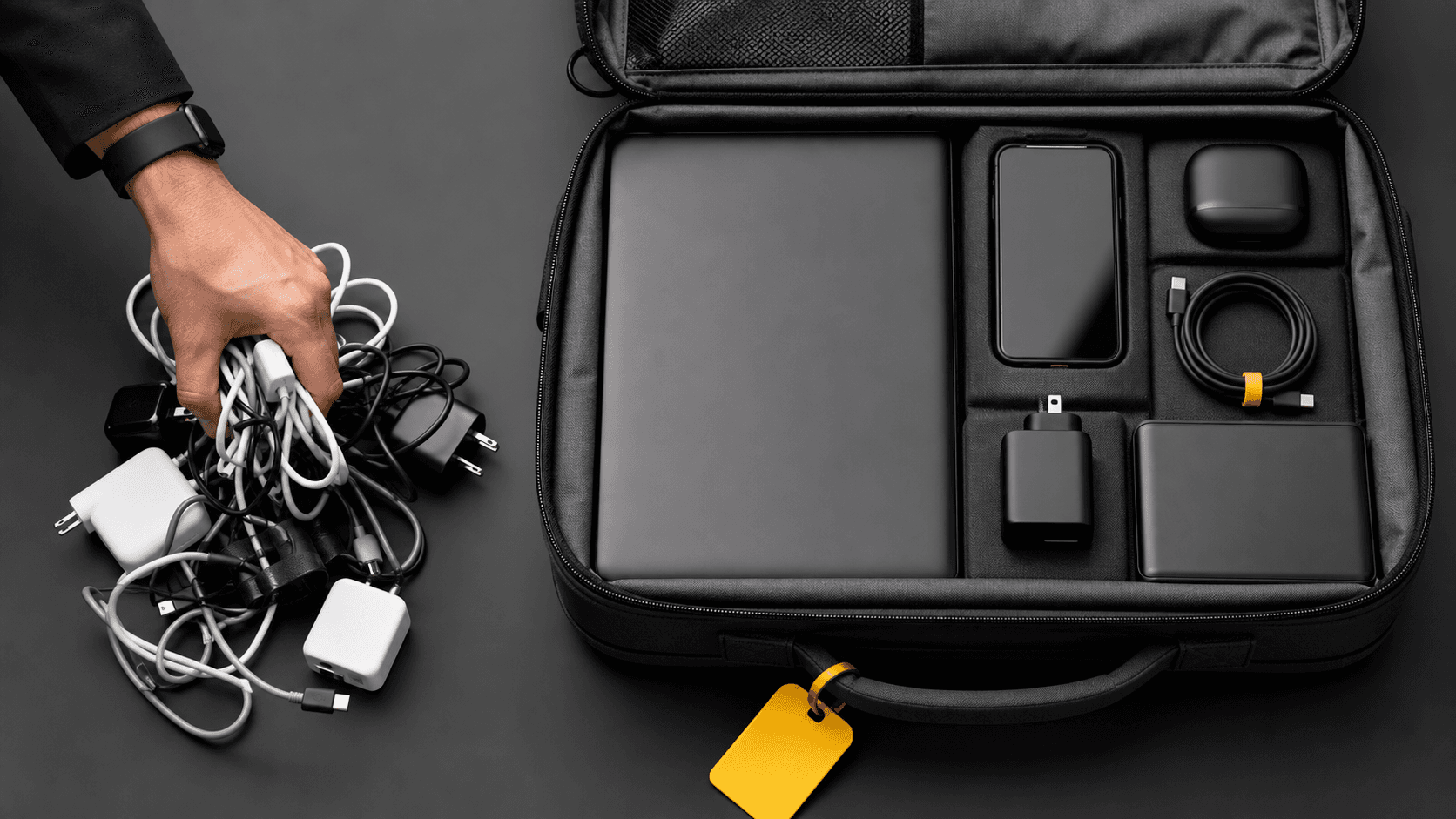
Travelling with a backpack full of random chargers is stressful. Different bricks, tangled cables, and that sinking feeling when you are sure you left one in the hotel wall. A portable home office charging station fixes that by turning all your charging chaos into one tidy kit that drops straight into your bag.
When we say home office charging station, we mean a compact, planned set of gear that can power your laptop, phone, tablet, earbuds, and everyday accessories with as few chargers and cables as possible. It sits on your desk at home, then comes with you for summer trips up north, winter escapes from Australia, conference weeks, or longer remote work stints. With a bit of thought, you can get faster charging, carry less weight, and stop worrying about dead batteries partway through a workday.
Decide What Your Home Office Charging Station Must Power
Before you buy or pack anything, do a quick device audit. Write down what usually comes with you on a long trip. For most people, that looks like:
- Work laptop, maybe a second personal laptop
- Phone, tablet, e-reader
- Earbuds or headphones, smartwatch, maybe a camera
- Power bank, mouse, keyboard, or other small accessories
Next, group these by how hungry they are for power.
- High-demand devices: laptops and some big tablets often need 60 to 140 W
- Medium demand: phones, smaller tablets, handheld consoles, usually 18 to 45 W
- Low demand: earbuds, watches, e-readers, small accessories, usually 5 to 20 W
You do not need to obsess over the numbers. Just know that more watts means more power and usually faster charging. A simple rule: look at the watt rating on your laptop's original charger. Your main charger should handle at least that, ideally with some extra room to also charge a phone or two.
Think about your main travel style too. If you work from Airbnbs and cafes, focus on a powerful wall charger and a simple cable kit. If you have long flights or long-haul trains, a decent power bank becomes more important. Heading off-grid or somewhere remote, you may want both a strong charger and one or two bigger power banks.
If you are leaving Australia, remember plug types and voltage. Many places use different outlet shapes. A single high-power USB-C charger plus a compact plug adapter is usually lighter and simpler than carrying multiple country-specific bricks.
Why a GaN Charger Beats a Bag Full of Bricks
Old laptop chargers are usually bulky, heavy blocks. They use silicon inside, which limits how small and efficient they can be. GaN, short for Gallium Nitride, is a newer material that lets chargers be much smaller, run cooler, and still push out high power.
Here is how that helps in real life. With the old setup, you might carry:
- One 65 W laptop brick
- One charger for your phone
- One for your tablet
- Maybe a couple of tiny bricks for earbuds and a watch
That is four or five pieces to pack, plug in, and forget in hotel rooms. A high-power GaN charger can replace all of them. One compact unit can fast charge a laptop and several smaller devices at the same time from a single wall outlet.
For frequent travellers and remote workers, it is worth choosing a GaN charger that can comfortably handle everything you carry. A high-output model turns into your single travel hub instead of one more brick in the bag.
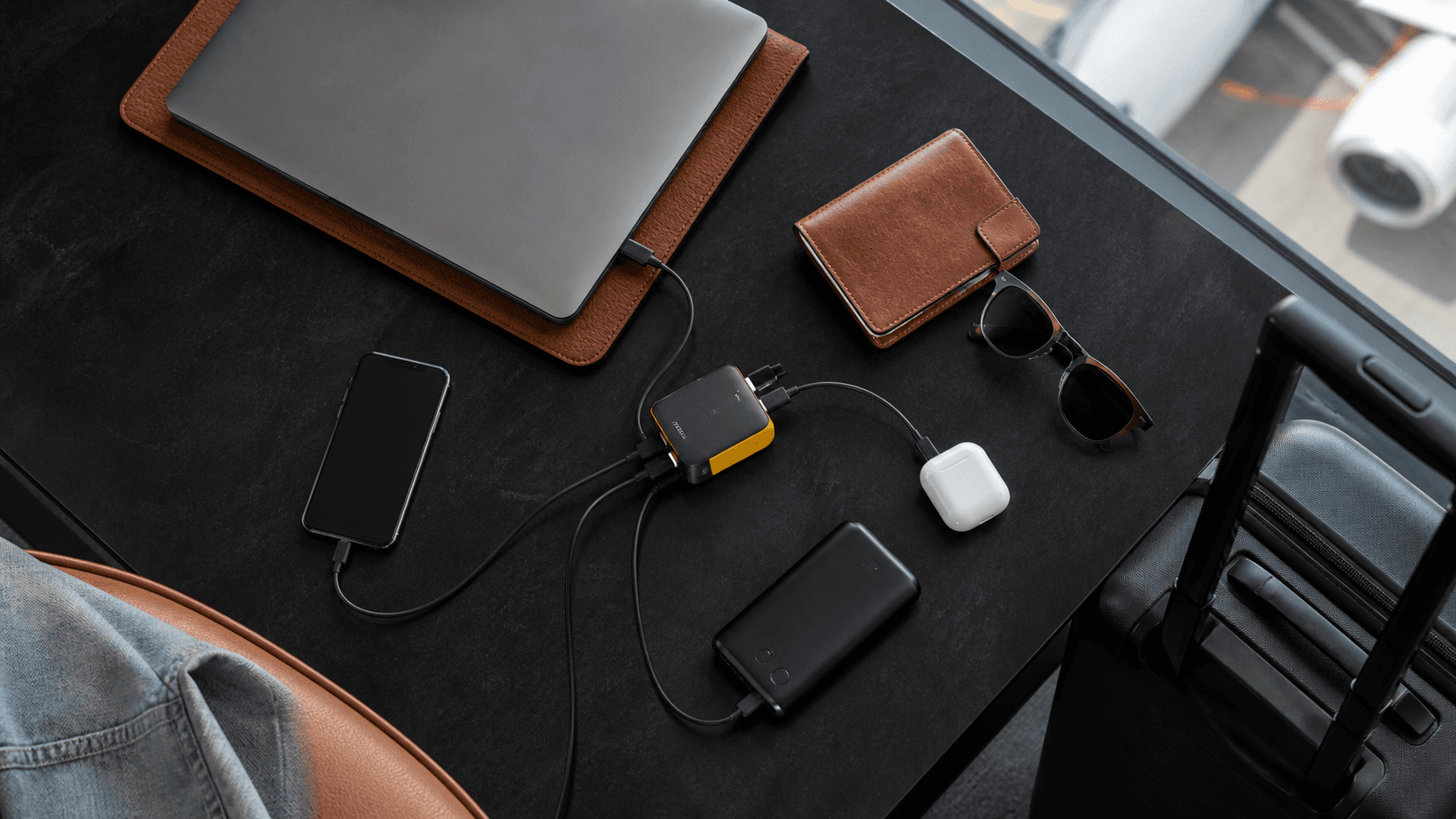
Our Zeus 280W GaN charger is a good example of what this looks like. With up to 280 watts available, it has the headroom to feed a high-end laptop that can pull up to 140 W, plus phones, tablets, and other gear at once. For travellers, that means:
- Fewer chargers to lose or leave behind
- Less weight and less bulk in your backpack
- The ability to turn almost any desk or cafe table into a full charging hub
GaN chargers also help future-proof your kit. More laptops are moving to USB-C and getting more power-hungry. Phones, tablets, and even headphones now support fast charging. A strong GaN unit gives you space to grow without needing a new charger every time you upgrade a device.
You can explore more GaN charging options and accessories on the Chargeasap website, but for most power users, a single high-wattage, hub-style charger will be the core of the setup.
The Essential Packing List for a Travel-Ready Power Kit
Once you know what you need to power, you can build a simple checklist. For most long trips, a lean, flexible kit looks like this:
- One high-power GaN charger, for example a 280 W unit that can run your main laptop plus other devices
- One compact backup USB-C charger, handy as a spare or for lighter days out
- Two or three good USB-C cables in different lengths, short 0.3 to 0.5 metre, standard 1 metre, and a long 2 metre for awkward hotel sockets
- At least one adapter, such as USB-C to Lightning or USB-C to USB-A, if you have older gear
- One reliable power bank sized to your travel style, smaller for quick top-ups, larger for long travel days
- A universal travel adapter if you are heading to other regions, and still want easy use when you are back in Australia
Magnetic or multi-tip cables can also be handy if you carry a mix of ports, like USB-C, Lightning, and older micro USB. They let you leave a tiny tip in each device and snap the cable on and off. That can reduce wear on ports and means you are swapping tips instead of swapping full cables.
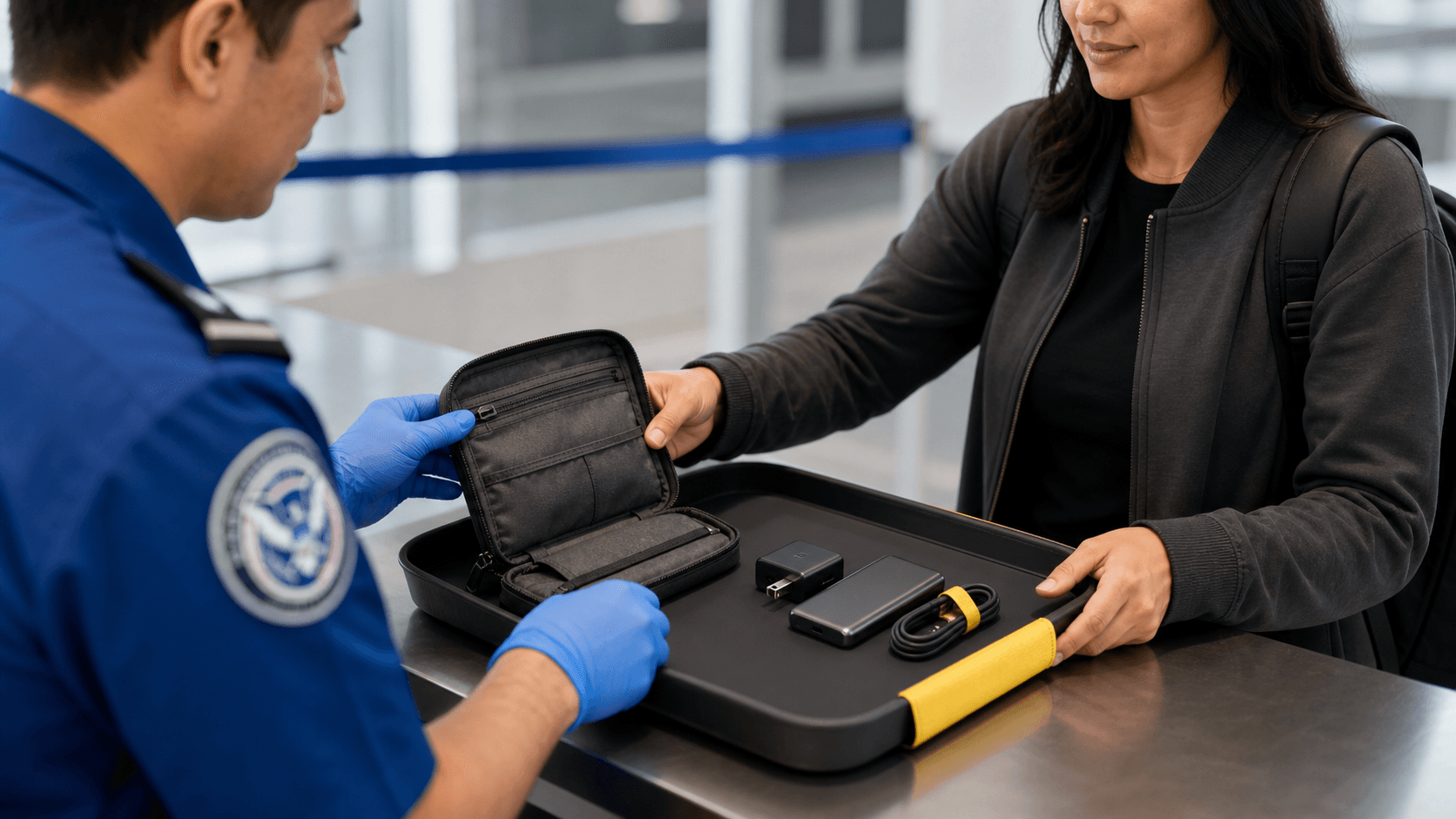
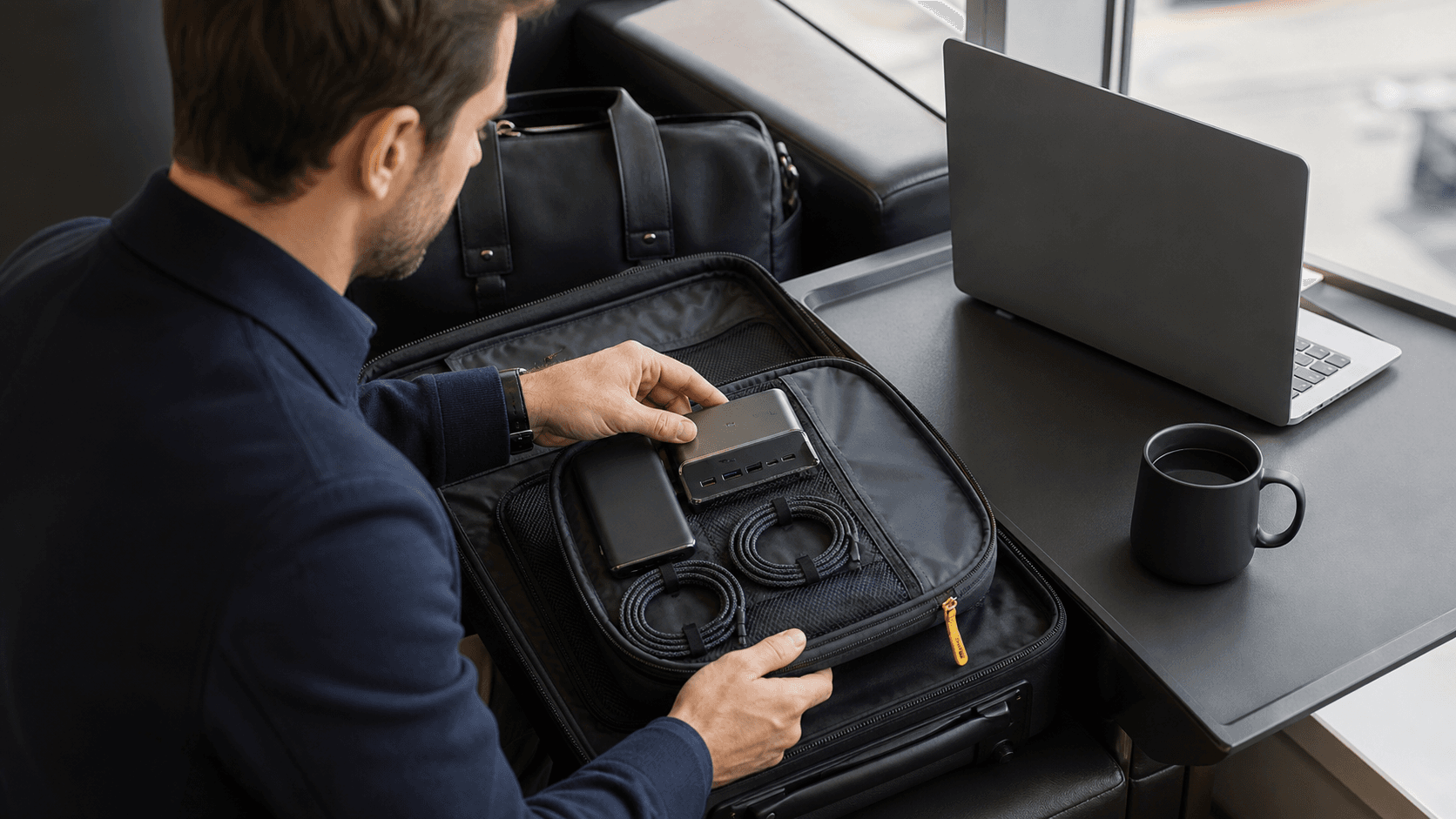
To keep everything neat, use a single tech pouch:
- Wrap cables with velcro ties to stop tangles
- Place the main GaN charger flat at the base so the pouch sits stable in your bag
- Use a small inner pocket for tiny items like plug adapters, SIM tools, and card readers
The idea is simple. Your home office charging station lives on your desk in that pouch. When it is time to travel, you unplug one charger from the wall, zip the pouch, and you are ready to go.
Smart Charging Habits on Planes, Trains, and Airbnbs
Good gear is only half the story. Smart habits keep you powered and protect your devices.
On planes, seat outlets can be weak or unstable. Use them gently to top up your laptop, but rely more on:
- Your power bank for steady phone and tablet charging
- Quick, full recharges with your GaN charger in lounges or once you reach your hotel
On trains and buses, a single good outlet is gold. Plug your main GaN charger into that and run your laptop, phone, and power bank from it at the same time. One wall socket becomes a mini office.
In Airbnbs and hotels, claim one main spot, usually the desk or bedside table. Set down your portable home office charging station and run everything from there. This is safer and tidier than leaving a charger in every corner of the room.
Keep a few simple safety rules in mind:
- Skip cheap power boards or strange adapters that look worn or flimsy
- Use certified cables that are rated for laptop charging, not just small gadgets
- Do not cover chargers with clothes or bedding so they can release heat properly
Seasonal travel adds a few extra points. In northern summer, do not leave devices charging on hot windowsills or in parked cars; batteries dislike extreme heat. For winter trips or escapes from Australia into cold climates, remember that batteries drain faster in low temperatures, so having a dependable GaN charger plus a good power bank makes a big difference.
A consistent routine helps too. Same pouch, same outlet, same order of packing at checkout. That simple habit cuts down the chances of leaving a charger behind.
Lock in Your Travel-Ready Charging Setup Now
The smartest time to sort your portable home office charging station is before your next long trip, not at the airport. Set everything up on your desk and test it. Plug in your laptop, phone, tablet, earbuds, and power bank at once. Make sure your main GaN charger handles the load, and that each cable reaches where you want it.
You can even build a kind of travel mode at home. Use a powerful GaN charger like Zeus 280W as your everyday desk hub. Keep all your regular devices charging from it, with your cables living in the same pouch you plan to travel with. When it is time to go, you unplug that one charger from the wall, zip the pouch, and your home office charging station is instantly ready for the road.
If you want to refine the rest of your travel power kit, from cables to power banks, you can browse the full range on chargeasap.com and build a setup that matches how you actually travel and work.
Power Your Home Office With Smarter, Faster Charging
Upgrade your desk setup with our dedicated home office charging station and keep every device ready to go without clutter or cable chaos. At Chargeasap, we design gear that fits your day-to-day workflow, so you can stay focused on the work that matters. Make the switch today and experience a cleaner, more efficient workspace in your home office.